
After earning certification as a Texas Long-Term Care Ombudsman, Alec Chapa gained firsthand experience helping residents, families, and care providers navigate complex disputes through collaborative problem-solving, advocacy, and informal dispute resolution.

Some of the Most Difficult Housing Conflicts
Don’t Happen in Housing Court
When people think about housing disputes, they often picture landlord-tenant conflicts.
Things like: Nonpayment of rent. Lease violations. Neighbor complaints. Evictions.
But some of the most challenging housing conflicts occur in environments where residents have fewer options, greater vulnerabilities, and significantly higher stakes.
Nursing homes.
Assisted living facilities.
State-supported living centers.
In these settings, disputes can affect not only housing stability, but health, dignity, safety, autonomy, and quality of life. And often given constraints on the elderly, there’s less flexibility for solutions, making skillful conflict resolution all the more important.
Those realities led Alec Chapa to pursue certification as a Texas Long-Term Care Ombudsman in 2024.
Becoming a Texas Long-Term Care Ombudsman
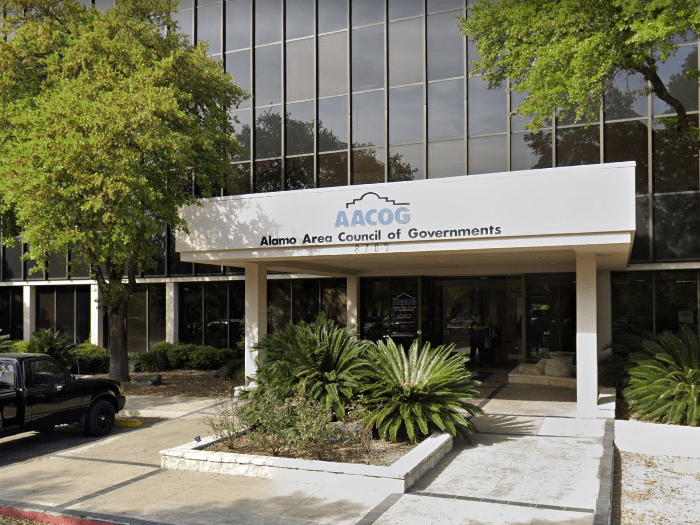
In August 2024, Alec completed certification through the Long-Term Care Ombudsman Program administered locally through the Alamo Area Council of Governments (AACOG).
The program operates under federal and state authorities established to protect the rights and well-being of residents living in long-term care facilities.
Certification required approximately 45 hours of instruction, self-study, observation, field experience, and supervised facility visits.
The training combined classroom learning with practical experience alongside professional ombudsmen working directly with residents, families, nursing staff, and facility administrators.
For Alec, the experience represented far more than earning a credential.
It offered a unique opportunity to study conflict in one of the most complex housing environments imaginable.

Learning Conflict Resolution Where
the Stakes Are Highest
Following certification, Alec served as a volunteer ombudsman conducting facility visits and supporting residents facing a wide variety of concerns.
Some involved misunderstandings, like why one resident had his preferred schedule and the other didn’t (unaware of the medical accommodation needed, and the resident’s right to privacy).
Others involved care planning disputes, like a resident who loathed every aspect of the facility, repeatedly convened care plan meetings for change, but never followed through on action items.
Some involved family disagreements, like the two adult children with shared Power of Attorney, battling each other on moving dad out, dragging the nursing facility into the mix.
Others involved questions about resident rights, facility practices, communication breakdowns, or systemic challenges affecting quality of life.
A central part of the ombudsman’s role is surfacing concerns early and creating informal pathways to resolution, educate residents regarding their rights, investigate facts impartially, and facilitate collaborative problem-solving before issues escalate into formal complaints or adversarial proceedings.
Rather than focusing on winners and losers, the process emphasizes practical solutions that can actually work over time.
That’s a drastic departure from how people typically think about complaints: long, drawn out formal processes, often with a punitive connotation, resulting in solutions which may or may not really be durable for the people they impact.
That philosophy closely mirrors principles long associated with mediation and Early Dispute Resolution, now considered best practices by the ABA.
What Housing Providers Can Learn
From Ombuds Practice
One lesson repeatedly reinforced during ombudsman training is that many conflicts begin long before people recognize them as conflicts.
Where others see ordinary behaviors, a trained ombudsman sees: patterns, rising suspicion leading to communication breakdowns, unmet needs that increase pressure and adversarial attitudes.
Training encouraged ombudsmen to pay attention to seemingly harmless statements that sometimes signal larger problems underneath the surface.
There are telling phrases we notice, such as:
“They don’t know what they want anymore.”
Or:
“It’s for their own good.”
While often well-intentioned, these statements can sometimes reveal tensions involving autonomy, dignity, communication, or decision-making authority.
By identifying concerns early, ombudsmen are often able to help parties address issues before relationships deteriorate further (and before the escalation paradox sets in: where higher stakes action appears simultaneously more and more uncomfortable, yet more and more like the “only choice”).
That same principle applies across many housing settings.
Whether the issue involves a nursing home resident, a tenant, a roommate, a family member, or a housing provider, early intervention often creates more options and better outcomes.

Why Adversarial Solutions Often Fail
One of the most valuable lessons Alec gained from ombudsman work involved the limitations of purely adversarial approaches.
In many long-term care environments, simple winner-take-all outcomes are rarely sustainable.
Consider a resident who wants to shower at 5:00 a.m.
The facility may be facing staffing constraints during breakfast preparation.
The resident may have strong personal preferences and legitimate concerns about dignity or routine.
Neither side is necessarily wrong. Still, clearly their positions are incompatible.
The challenge becomes finding a solution that balances competing needs while preserving relationships and maintaining operational realities.
This type of practical problem-solving is common within ombuds work.
And it reflects why mediation-style communication often succeeds where positional arguments fail. Digging deeper into why people want x,y, and z, what else might satisfy those interests and needs, and creating structured space for exploratory conversation helps open up new possibilities that lead to better arrangements.
When people must continue living, working, or interacting together, collaborative solutions tend to endure longer than imposed outcomes (and just feel better throughout the lifecycle).
Strengthening Expertise in Housing
and Dispute Resolution
The certification also deepened Alec’s understanding of issues affecting older adults and vulnerable populations, including:
- Resident rights in nursing and long-term care facilities
- Dementia-related concerns
- Elder abuse, neglect, and exploitation
- Family conflict
- Care planning disputes
- Mental health considerations, including dementia
- Disability-related accommodations
- Systems advocacy
- Collaborative decision-making
- Resident-directed care
These experiences expanded an already interdisciplinary background that includes mediation, organizational conflict resolution, housing dispute resolution, nonprofit leadership, and public-sector collaboration.
They also strengthened Alec’s ability to apply ombuds principles within broader housing contexts, including private rental housing, affordable housing programs, community housing initiatives, and dispute resolution systems designed to support vulnerable populations.
Although Alec’s required volunteer service has concluded, relationships formed through the program continue today.
He remains connected with former trainers and colleagues, including staff members from AACOG’s Long-Term Care Ombudsman Program, such as his trainer Sherri Smith and now-Managing Local Ombudsman Renee Hernandez, who Alec shadowed during resident visits.
The experience also strengthened connections between his work in mediation and his leadership within the broader ombuds profession, including service with the American Bar Association Ombuds Committee.
Those intersections continue shaping how Alec approaches conflict: not simply as a dispute to resolve, but as a system to understand, improve, and strengthen.

Why This Matters for Housing Providers
Many housing conflicts are treated as legal problems, even though Mosaic’s housing work repeatedly shows that many begin as relationship and communication problems. It is when organizations and leaders fail to understand this that is creates missed opportunities that costs everyone.
Often, conflicts begin as communication problems, like a tenant who sent the return deposit paperwork to the wrong address, leading to a lawsuit that settled mediation with us.
Or expectation problems, like why maintenance took longer to fix one AC unit than another (not realizing the units aren’t identical in age or condition).
Or relationship problems, like when small missteps never get addressed, then create a narrative of disrespect, and end up turning the next small issue into a heated blow up.
The earlier those issues are identified and addressed, the more options remain available. And the more that legal remedies are besides the point (because issues didn’t have to escalate).
Whether supporting residents in long-term care facilities, helping landlords and tenants resolve disputes, or designing systems that prevent conflicts from escalating in the first place, the underlying principle remains remarkably consistent:
Resolve issues at the lowest level possible, before positions harden and costs multiply.
That principle sits at the heart of both ombuds practice and effective housing dispute resolution.

Explore Housing Conflict Resolution Resources
Housing disputes are rarely limited to leases and legal notices.
Many begin with neighbor disagreements, roommate conflicts, communication breakdowns, unmet expectations, or concerns that simply go unaddressed for too long.
To learn more about proactive approaches to housing conflict:
- Explore the Proactive Asset Management for Landlords webinar
- Learn about neighbor conflict resolution
- Explore roommate conflict mediation
- Understand options around landlord-tenant dispute resolution
- Learn how HousingShield is a proactive system helping providers reduce conflict, stabilize occupancy, and avoid unnecessary legal expenses
The earlier a conflict is addressed, the more likely it is to become an opportunity for resolution rather than escalation.
