
Bridging landlords, tenants, nonprofits, and public partners through cross-sector collaboration, impartial dispute resolution, and a shared commitment to housing stability.
Homelessness Prevention Takes More Than One Organization
What does it take to prevent homelessness?
Housing itself is only the beginning. Financial assistance. Legal services. Supportive services. Public resources.
But there’s another piece of the puzzle that sometimes gets overlooked:
Helping people resolve the conflicts that threaten their housing in the first place.
What many can easily forget is that before lawsuits are ever filed, they so often begin as problems that need solving. Collaborative conflict resolution is a perfect approach for that.
In June 2026, I was invited to join the Alliance to House Everyone Advisory Board, facilitated by Close to Home, the organization coordinating San Antonio and Bexar County’s homelessness response system.
I officially onboarded September 2, joining a collaborative network of nonprofits, public agencies, housing providers, advocates, and community partners working toward a shared objective: making homelessness rare, brief, and nonrecurring.
For me, this represented an important milestone in a journey that began years earlier working on individual housing mediation cases, then grew to include hundreds across San Francisco, and has since increasingly evolved toward understanding the systems surrounding them.
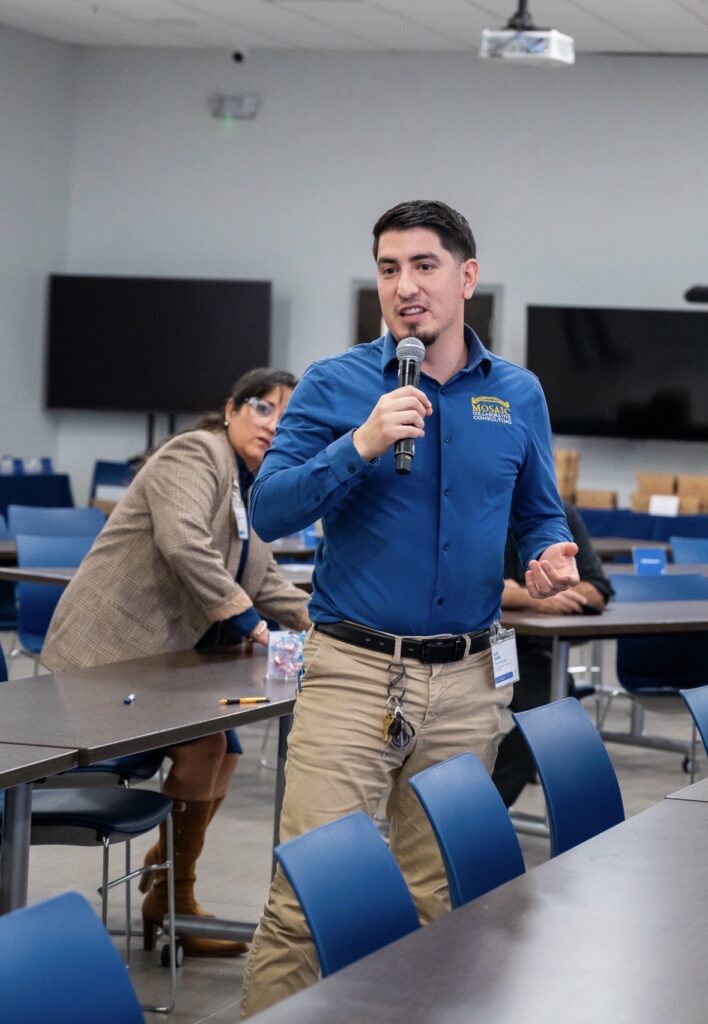
Two Years, Two Interviews, One Mission
This was years of determination in the making, showing my dedication more than saying it.
In 2024, La Juana Chambers encouraged me to explore the organization after recognizing similarities between its mission and the housing conflict-resolution work I was developing through Mosaic. We crossed paths at Alamo PMI, given her project management company and my past involvement with the chapter.
I applied to participate in the Alliance and interviewed a few months later.
I wasn’t accepted. And I’m glad. Let me explain.
The concern, as I understood it, was reasonable and reflected a principled approach: Close to Home had a responsibility to protect vulnerable populations and carefully consider whether participation by a private business could create competing incentives, outside of the advisory role on sharing best practices.
I respected that. Tremendously.
Organizations serving vulnerable communities should ask difficult questions about prospective partners, particularly when financial interests and public-service missions intersect. Taking the time to vet organizations and articulate the concern were both valuable: the first keeps the mission on track, and the second allowed me to address the concern clear-eyed over the next few years.
And ure enough, two years later, I interviewed again. And quite appropriately, I was asked a particularly good question:
“What changed since the last time?”
My answer was simple. A lot. And nothing at all.
A lot had changed professionally.
Mosaic had handled hundreds more housing disputes. I served as a conciliator with the U.S. Department of Justice Community Relations Service, co-chaired the American Bar Association’s Ombuds Committee, served on the board for the Texas Association of Mediators, published research on housing dispute resolution in the ABA and ICMA, and continued refining HousingShield’s model for early intervention.
But the underlying commitment hadn’t changed.
I was still pursuing the same mission: making constructive conflict resolution more accessible, practical, and sustainable.
The difference was that two more years of work, each gaining momentum from the one prior, gave the Alliance a stronger basis for evaluating that commitment.
Now with more demonstrated commitment and integrity, I was welcomed aboard.

Understanding the System Behind Homelessness
Close to Home serves as the lead agency for San Antonio and Bexar County’s Continuum of Care, a coordinated network addressing homelessness across the region.
Its Alliance to House Everyone brings together organizations with different roles, resources, and perspectives.
Some provide shelter. Others offer rental assistance, healthcare, outreach, legal services, housing navigation, or permanent housing.
And others contribute research, funding, community engagement, and strategic planning.
No single organization can solve homelessness alone.
That’s precisely why coordination matters.
One of the most interesting aspects of this work is that homelessness prevention requires understanding an entire system, not simply improving one service. Homelessness is a constellation of issues, so the solution to it is equally complex.
For example, financial assistance may address unpaid rent. Legal counsel may protect important rights. Housing navigation may help someone relocate.
But what happens when a landlord and tenant could have resolved the underlying disagreement before any of those interventions became necessary?
That’s where my experience with mediation, negotiation, ombuds practices, and dispute systems design may offer another perspective.

Prevention, Diversion, and the Missing Middle
One important distinction in homelessness response is the difference between prevention and diversion.
Prevention focuses on helping households avoid losing stable housing.
Diversion focuses on helping people facing an immediate housing crisis identify safe alternatives to entering homelessness.
Both are essential.
Both require collaboration.
And both may benefit from earlier, more effective communication between residents, housing providers, and support organizations.
The Alliance has been examining how to expand prevention and diversion capacity across San Antonio and Bexar County. Planning figures shared through this work identified annual ambitions of supporting approximately 1,923 households through prevention and 763 through diversion for a combined total 2,686 households, as shared in planning sessions.
For me, the more interesting question is how many different interventions at different times could contribute to reaching them.
HousingShield is one potential piece.
Rather than waiting until a conflict reaches court, its model combines education, early assessment, negotiation coaching, mediation, and other appropriate assistance to address housing disputes while more options remain available. And we’ve seen it work before.
That doesn’t replace rental assistance, legal counsel, emergency shelter, or existing homelessness services.
It complements them by addressing a different part of the problem.
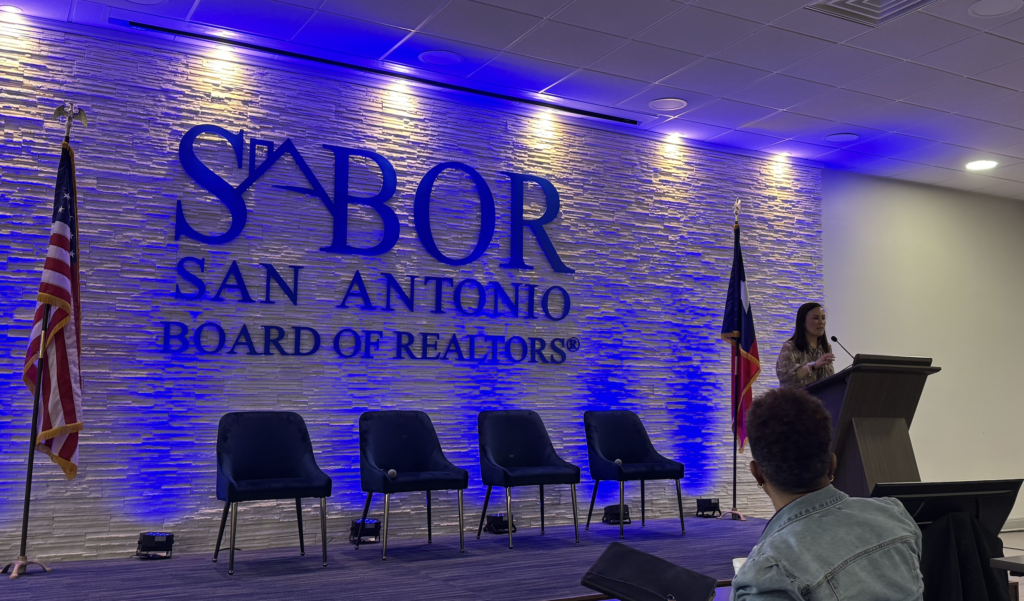
Housing Providers Are Partners, Not Opponents
There’s another principle I want to emphasize.
Housing providers are essential partners in homelessness prevention.
That doesn’t mean landlords and tenants always have identical interests. They don’t.
A resident may be worried about losing their home. A housing provider may be concerned about unpaid rent, property damage, operating expenses, or the sustainability of their investment.
Both sets of concerns deserve to be understood.
One of the greatest strengths of mediation is that it doesn’t require us to choose one side’s interests over the other’s.
Instead, we ask whether the parties can identify a solution that better addresses their respective needs than continued escalation. And it creates an opportunity to identify existing or potential value still hidden, and position the parties to harness and distribute it together. That is often key to getting parties unstuck: what can one side do that benefits the other, without much (or any) expense to themselves? And remember, value is not always financial nor literally tangible.
That’s particularly important in homelessness prevention.
If programs ignore the practical realities facing housing providers, they risk creating solutions that are difficult to sustain.
If they ignore the circumstances facing residents, they risk overlooking the human and financial consequences of housing instability.
Successful collaboration requires understanding both.

Why Advisory Participation Doesn’t Compromise Impartiality
Some housing providers may reasonably wonder whether participating in a homelessness prevention alliance changes Mosaic’s impartiality.
It doesn’t.
And that’s one reason I prefer the term “omnipartial,” because it better reflects caring for all sides of a dispute and the effort to collaborate. Involvement doesn’t fracture the mediator’s role; so long as they remain principled in their engagements, it deepens and supports that role.
Serving in an advisory capacity is different from representing a party in a dispute, or dropping concerns for the other parties the moment you’re in a private meeting (as mediators, we do this all the time; it’s called “caucus”).
My participation allows me to learn from organizations addressing homelessness, contribute conflict-resolution experience, and better understand the barriers facing residents and service providers.
It does not make Mosaic an advocate for one side of a landlord-tenant dispute.
When serving as a mediator, our responsibility remains to the integrity of the process, party self-determination, appropriate impartiality, and TMCA professional standards.
Nor does advisory participation confer special treatment, or an endorsement of HousingShield by any given stakeholder in the housing ecosystem.
Those boundaries matter.
This comes back to the same lesson: housing is a constellation of issues, and it requires more sharing across these many stakeholders and systems, not less. The more we can engage with stakeholders, the better we can understand their interests and support their multi-party collaboration processes, whether sitting with several at a time or just having a one-on-one.
That’s exactly why I welcome the same level of engagement from housing providers.
In the end, the answer to competing perspectives isn’t to exclude one. It’s to understand them well enough to design something that works.
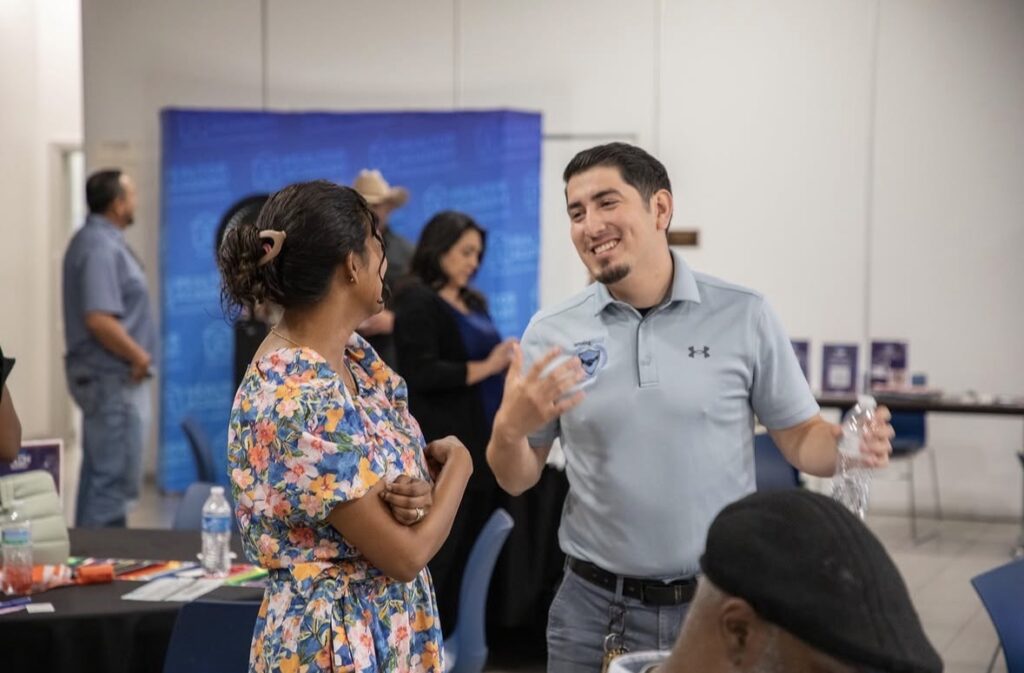
My First Assignment: Helping San Antonio Tell a Better Story
One of my first opportunities to contribute was participating in an Alliance CEO roundtable focused on establishing strategic objectives.
I joined discussions around the foundational work of public awareness and collaboration.
Our group explored an interesting challenge.
Many people recognize homelessness as a serious problem, but aren’t sure what they can personally do about it.
That can make the issue feel overwhelming.
We discussed approaches that would make homelessness more human through individual stories while helping residents identify small, practical ways to participate.
One example we referred back to was Billy Bundles, an existing Close to Home initiative honoring Billy Mahone III.
These bundles allow community members to carry essential items and information about local resources, making it easier to support a neighbor facing homelessness. This unlocks the door for tapping into the broader community, lowering the barrier to entry.
The principle behind our discussion was simple:
Not one person can do everything. But everyone can do something.
It’s a principle that applies equally well to conflict resolution.
A single mediator can’t resolve every housing dispute.
A single nonprofit can’t prevent every eviction.
A single landlord can’t solve housing affordability.
But coordinated efforts can create opportunities that none of us could provide alone.

From San Antonio to a Larger Texas Conversation
Joining the Alliance has already created opportunities to learn from professionals working across the homelessness response system.
It also helped connect me with the broader Texas Continuum of Care community, including the Texas Homeless Network conference in September 2026.
That experience opened further conversations about training, productive landlord engagement, and potential collaboration with organizations serving communities across Texas.
The opportunity is particularly interesting because housing disputes don’t contain themselves nearly within organizational boundaries.
A tenant’s problem may involve a property manager, a nonprofit, an attorney, a court, and a public assistance program.
Each organization sees part of the problem. The person experiencing it lives through the entire process, touching several of those realms.
That makes cross-sector coordination more than a networking exercise. It’s a practical necessity that reflects the age-old metaphor of a group of people, each holding a different part of the elephant: getting them talking is where the magic of seeing the bigger picture happens.
From Individual Cases to Community-Level Prevention
Looking back, I can trace a fairly clear progression.
My early housing mediation work focused on helping individuals resolve specific disputes.
Working with San Francisco’s Conflict Intervention Service demonstrated how early, interdisciplinary intervention could improve access to conflict resolution.
Volunteering with Texas dispute resolution centers in Bexar County, central Texas, and Montgomery county exposed the limitations of waiting until disputes reached court.
Developing HousingShield challenged me to think about financing sustainably within ethical constraints, access to services even when people most at need are least capable of paying, participation across a wide array of demographics, and prevention at scale.
And working with organizations such as Opportunity Home San Antonio helped bring those principles into increasingly complex housing environments.
Now, participation in the Alliance offers another perspective: understanding how dispute resolution might complement a much broader network of services, institutions, and community priorities, and help limited funding go further while improving outcomes with the power of early action.
And like I see in mediation all the time: sometimes all it takes for a great idea to become reality is the right people, in one room, thinking the same thing at the same time.
For now, the immediate opportunity is to contribute, listen, build relationships, and identify where collaborative conflict resolution can genuinely improve outcomes.

Looking Ahead:
A More Collaborative Housing System
Homelessness prevention is not simply about stopping an eviction filing.
It’s about helping people remain safely and sustainably housed whenever possible, and helping them find appropriate alternatives when remaining isn’t feasible. Parties and the material conditions shape outcomes, not the impartial professionals. We simply control processes that lead to better, more productive outcomes.
But those processes don’t have to just stop at the individual case level. They can support groups with diverse interests and plot a path for shared success built on their shared goals. Rarely are those goals established and clear, which is why they need an impartial professional. And the deeper these groups engage with HousingShield, the better we can serve them as an omnipartial, we-support-everyone standpoint.
I’m grateful to Close to Home and the Alliance to House Everyone for the opportunity to contribute to this work.
The next chapter isn’t about Mosaic solving homelessness.
It’s about bringing another useful set of tools to a community already doing difficult, important work.
Because no single organization can do everything, but together we can do more. And with a professional neutral working to develop, expand, and when needed repair the infrastructural relationships, the further we can get together.
Continue Exploring
Learn about the Alliance to House Everyone
Explore the origins of HousingShield
See Mosaic’s public housing work
Learn about Alec’s public-sector conflict-resolution experience
Interested in earlier, more collaborative housing dispute resolution? Learn more
Represent a housing organization or community partnership? Get in touch
